Walvis Bay history begins before the colonial port
Walvis Bay history begins with communities on the coast, rather than the annexation of a harbour. The municipality describes Khoikhoi, Topnaar and Aoni presence over thousands of years before European contact. Keep that longer human history in view when reading about the later political changes. The dates attached to colonial administration describe changes of control, not the beginning of life beside the bay.
The natural harbour provides the geographical setting for the story. Today Walvis Bay is a coastal city with fishing and logistics functions, while the lagoon and Namib dunes give the surrounding landscape its character. For a visitor, it helps to distinguish these connected subjects: the communities of the coast, the political history of the harbour, and the working city that can be seen today.
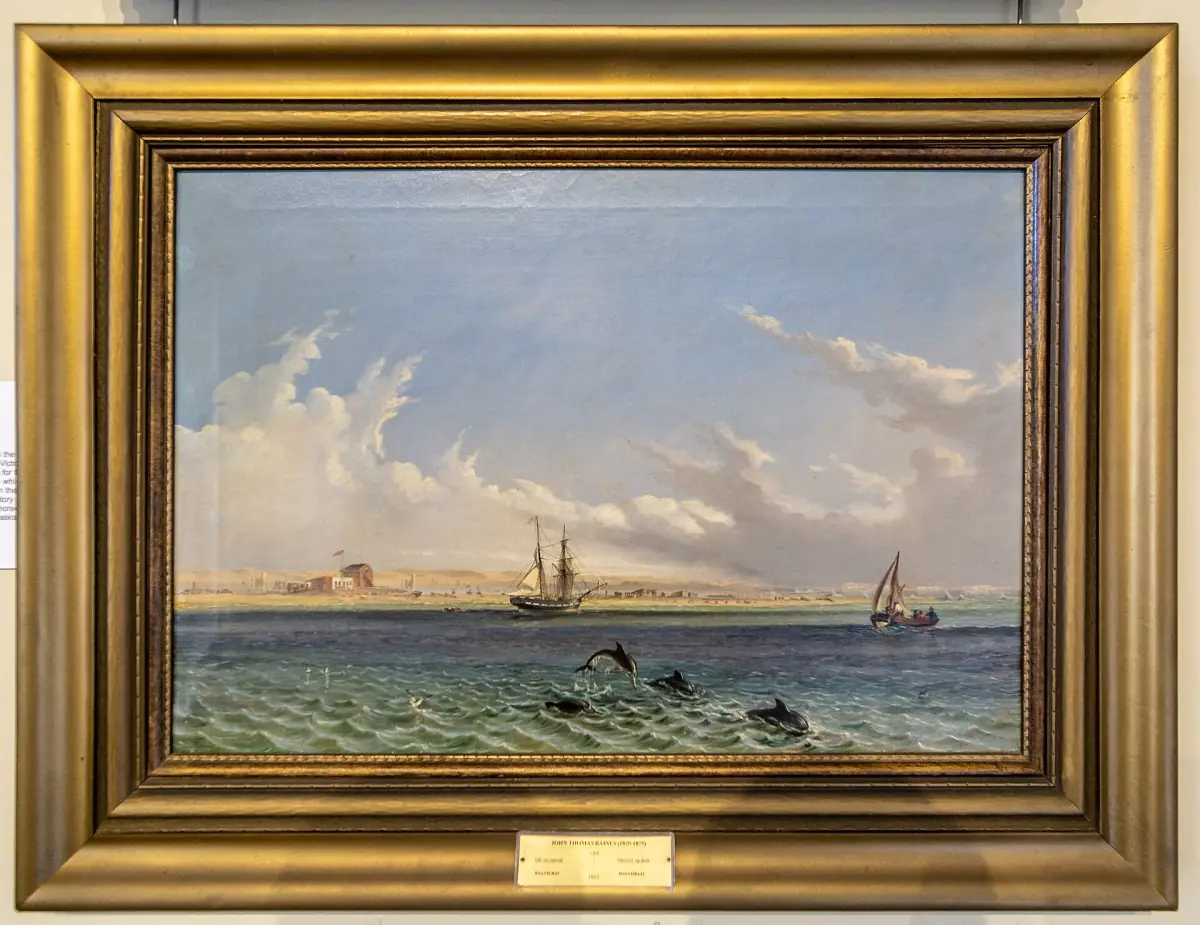
The historic engraving used on this page offers a different kind of view from a contemporary port photograph. Read the ships and open water as part of a historical representation, rather than as a map for a present-day visit. The cruise-port guide deals with current arrival planning; the chronology here explains how the city's political position changed.

Our picks: History
This present-day coastal excursion links Walvis Bay and Swakopmund.
Hand-picked tours, booked through Viator. Prices are indicative starting prices in US dollars (as of November 2026). Tap a tour for live availability and the current price in your currency.


Photos – Walvis Bay and Swakopmund outing: Sandwich Harbour, Walvis Bay (37731184332) · Crop of a photo by Sonse · CC BY 2.0

See the present-day coast
This outing links Walvis Bay and Swakopmund in a contemporary coastal programme, with an air-conditioned vehicle, bottled water and onboard WiFi. Use it to explore the coast alongside the historical background on this page.
Annexation, the Cape Colony and the Union
The municipality dates the British annexation of the harbour and settlement to 12 March 1878. Walvis Bay was transferred to the Cape Colony in 1884 and incorporated into the South African Union in 1910. Keeping these stages separate makes the sequence easier to follow. Annexation, transfer to another administration and incorporation into the Union refer to different moments in the harbour's colonial history.
These dates are useful anchors when looking at the city, but they should sit within the longer coastal story. Begin with the earlier communities, then follow the administrative changes in order. That approach avoids allowing the arrival of European powers to stand in for the whole history of Walvis Bay and leaves room to understand the port as part of a lived coastal landscape.
Independence in 1990 and reintegration in 1994
Namibia became independent on 21 March 1990. Walvis Bay initially remained under South African control. The municipality places the city's reintegration at midnight on 28 February 1994. Those dates answer different questions: when Namibia became independent, and when Walvis Bay was reintegrated. Keeping them distinct is central to understanding why the city's modern political timeline has a separate final stage.
When reading a short account of the city, follow the sequence through to reintegration rather than stopping at national independence. The earlier Cape Colony and Union dates explain the administrative path leading up to it. For the visitor, this gives a clear framework for understanding the harbour's place in Namibia without needing to turn a local history page into an interpretation of treaty provisions.
The mission church as a historical landmark
The Rhenish Mission Church on Fifth Road is another tangible thread in the city's story. According to the municipality, it was manufactured in Hamburg in 1879 and shipped to Walvis Bay. That date places it close to the beginning of the annexation period. Read the church as a particular building with its own history, alongside the broader chronology of control over the harbour.
If the building interests you, make it a subject for your city planning and establish visiting arrangements separately. The historical connection to Hamburg is the reason to notice it here. It should not be confused with a promise that a coastal excursion includes a church visit. The things-to-do guide brings together other interests around Walvis Bay and the coast.
A working harbour, lagoon and salt economy
The present-day harbour gives the history a continuing economic setting. The municipality describes Walvis Bay as Namibia's largest and busiest port. Fishing and logistics belong to the city's identity alongside the landscapes visited on excursions. Looking at the waterfront with that in mind helps explain why a coastal city can be both a place of nature observation and a centre of working maritime infrastructure.
South of the lagoon, salt production adds another connection between sea and land. Seawater passes through evaporation, concentration and crystallisation ponds before the salt is mechanically harvested and washed. Sun and wind are part of that process. The lagoon and salt-works guide explains the landscape; production areas should be approached through the arrangements of a suitable organised outing.
Put these elements together without expecting one excursion to interpret every period. A present-day coastal outing can introduce Walvis Bay and nearby Swakopmund, while this chronology supplies background for what you encounter. Choose a programme by its actual stops and included services, and use the history to understand the city beyond a list of sights.
Questions about the city's past
Was Walvis Bay reintegrated at Namibian independence?
Namibia became independent on 21 March 1990. The municipality dates Walvis Bay's reintegration to midnight on 28 February 1994.
When was the harbour annexed?
The municipality gives 12 March 1878 for British annexation, followed by transfer to the Cape Colony in 1884 and incorporation into the Union in 1910.
What connects the mission church with Hamburg?
The municipality describes the church on Fifth Road as manufactured in Hamburg in 1879 and shipped to Walvis Bay.